


How to Use a Bead Breaker Safely for DIY Tyre Repairs

Breaking a tyre bead safely starts with fully deflating the tyre, applying proper lubricant, and using steady pressure to separate the bead from the rim. Get this step right, and the rest of the repair becomes straightforward. Get it wrong, and the tyre is ruined before the real work even begins.
What Is a Bead Breaker?
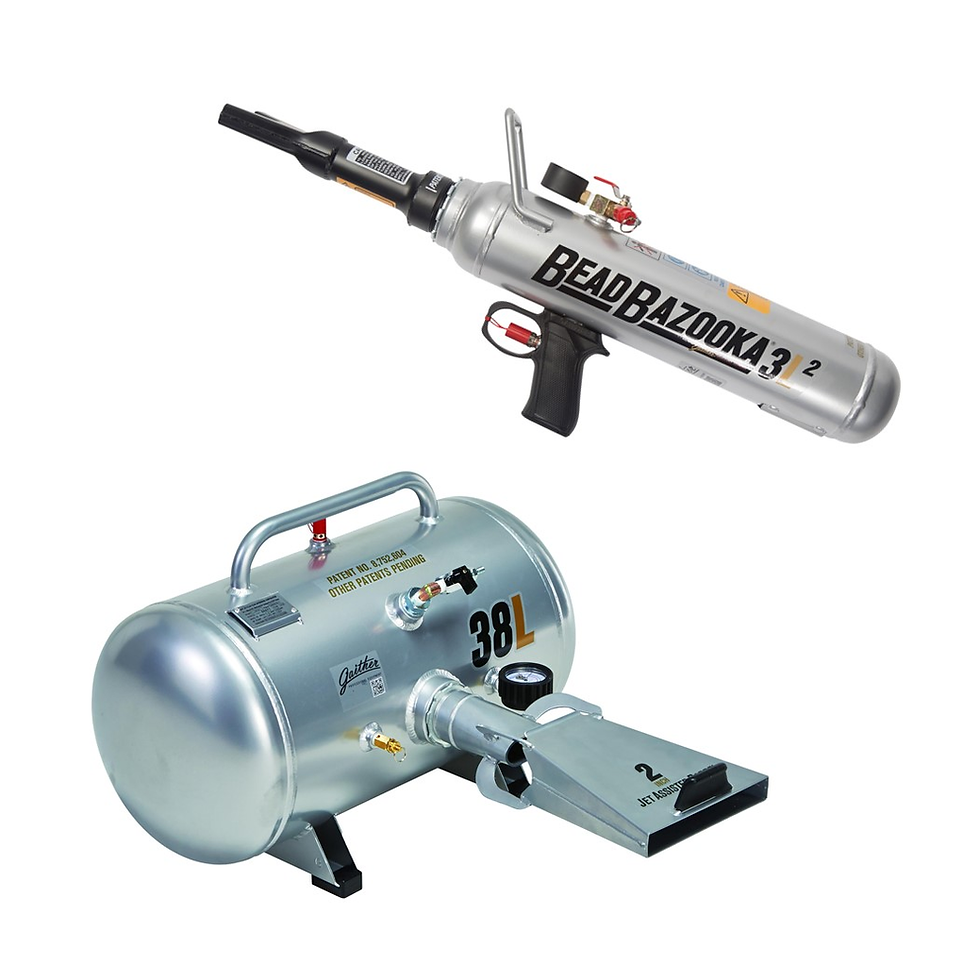
A bead breaker is a mechanical tool that separates the tyre's reinforced edge (the bead) from the wheel rim so internal repairs can start.
The bead locks the tyre to the wheel, holds air pressure in, and keeps the tyre seated while the vehicle moves. Without a healthy bead, a tyre can't do its job safely.
Bead breaking isn't something to rush. It's the foundation of every proper tyre repair.
Why Getting This Step Wrong Is So Costly
Many DIYers underestimate how strong a bead is and apply too much force in the wrong spot. The result is a torn bead wire or cracked rubber. Once that happens, the tyre becomes scrap.
With the right process, bead damage is almost entirely avoidable.
Before You Touch the Tool- Safety Checklist
There are a few non-negotiable steps before any force gets applied.
Remove the valve core fully to deflate the tyre
Put on safety glasses and protective gloves
Check the sidewall and inner liner for visible damage
Place the wheel on a flat, stable surface
Apply a proper SDS-compliant tyre lubricant, not dish soap
That last point matters more than most people think. Dish soap causes corrosion and makes bead seating unreliable. A proper lubricant reduces friction, protects the rim, and sets the tyre up for correct reseating.
How to Break the Bead- Step by Step
The process itself isn't complicated. But each step needs to be followed in order.
Confirm the tyre is fully deflated before anything else
Position the tool close to the rim flange, not on the sidewall
Apply steady, controlled pressure until the bead separates
Work gradually around the full circumference
Repeat the same process on the opposite side
Even pressure protects the bead bundle and prevents the casing from distorting. If the tyre has a hump rim design, make sure the tool is built to handle that profile. Some rims hold the bead under extra force and need the right equipment to match.
What Happens After the Bead Separates
Breaking the bead just creates access. The real repair work starts now.
Inspect the inner liner carefully. Look for penetrations, liner cracks, or signs of moisture. These point to what actually needs fixing. A solid repair uses cold or hot vulcanisation. This chemically bonds the patch to the tyre structure and restores air retention properly. A simple "glue and go" won't hold the same way.
This is also where the right tyre repair kit matters. A matched kit means materials are formulated to work together. Mixing brands can weaken the bond and shorten the tyre's life.
Why Proper Repairs Are Worth the Effort
A correctly repaired tyre can go on to a second or even third service life through retreading. That's a real saving, financially and environmentally.
Repairing one passenger tyre saves roughly 35 litres of crude oil compared to making a new one. It also cuts landfill waste and keeps operational costs lower for workshops and vehicle owners alike.
Tips That Experienced Technicians Follow
These small details improve repair outcomes consistently.
Check cement readiness using the back-of-finger test; tacky but no wet residue
Store patches and fluids in a cool, dark, dry place away from sunlight
Never rush bead seating during reassembly
Confirm even seating all around before inflating
Products that carry TÜV certification have been tested to safety standards. Using certified tyre repair tools and materials removes the guesswork and gives consistent results every time.
The Case for a Complete Repair System
Individual tools can get the job done. But a coordinated system does it better.
When the bead breaker, lubricants, cement, and patches all come from one system designed to work together, the repair holds longer. The chemistry is compatible. The process is predictable. And the risk of premature failure drops.
This "one system" approach is what separates professional-grade results from guesswork.
Where REMA TIP TOP Australia Fits In
REMA TIP TOP supplies complete tyre repair systems based on exactly this principle. Their tools and materials are engineered to work as one integrated process, from bead breaking through to vulcanisation and final reseating.
Their products are used by professional workshops and fleet operators across Australia. The focus is on safety compliance and tyre longevity. For anyone wanting workshop-level reliability, their team can point to the right solution for the job.
FAQs
Is breaking a tyre bead dangerous?
It can be if the tyre isn't fully deflated or if pressure is applied unevenly. Always remove the valve core first and work gradually.
Can dish soap replace proper bead lubricant?
No. Dish soap causes rim corrosion and leads to poor bead seating. A proper SDS-compliant lubricant should always be used.
What commonly damages a tyre bead during DIY repair?
Too much force, wrong tool placement, and dry friction are the three most common causes.
How long does a properly vulcanised repair last?
When done correctly, a vulcanised repair can last the remaining legal tread life of the tyre.
Why does it matter which repair materials are used together?
Different brands use different chemical formulations. Mixing them can reduce bond strength and lead to earlier repair failure.

Comments